Some jobs will be eliminated, many will be created, every single job will be impacted.
Jensen Huang, CEO, Nvidia
AI Doesn't Eliminate Talent.
It Repositions It.
When automation frees your best operators, most organisations bench them, buy them out, or lose them to competitors. The answer is the Sideways Deployed Specialist (SDS): your own people, repositioned as the adoption infrastructure your transformation has been missing.
Aigentic Change Partners guides enterprises through the human side of AI transformation, building the internal capability engines that outlast any consulting engagement.
Why Transformation Stalls
Your AI programme is not failing because of technology. It is failing because of people.
Traditional training produces permanent user adoption rates below 20%. The instinct is to push harder: more workshops, more change communications, more vendor support. None of it moves the needle sustainably.
Meanwhile, a different problem is quietly compounding. Across your organisation, skilled operators are having significant portions of their workflows automated. Their capacity is being freed. Most enterprises treat this as a cost saving. A few treat it as overhead. Almost none treat it as the strategic asset it actually is.
The data on what actually works is unambiguous.
"Peer-delivered AI implementation produces adoption rates above 80%. Traditional training produces rates below 20%. The difference is not the technology. It is who is in the room."
Drawn from Stripe's AI Accelerator programme findings, cited in "Sideways is the New Up"
The Aigentic Methodology
Introducing the Sideways Deployed Specialist
The third tier of talent your AI transformation is missing.
Enterprise transformation has always relied on two archetypes. The internal line worker brings deep domain knowledge but limited horizontal reach. The external adviser brings technical proficiency but little local context, at significant cost.
The SDS fills the gap between them.
The full architecture, governance model, and economics are in the SDS Blueprint. Read it free →
The Three Tiers of Transformation Talent
Internal Line Worker
Traditional- High domain knowledge
- Low horizontal leverage
- High automation vulnerability
Sideways Deployed Specialist (SDS)
The Third Tier- High domain knowledge
- High AI fluency
- Explicit cross-boundary mandate
External Adviser
Traditional- Low institutional context
- High technical proficiency
- High cost, transient engagement
The SDS DNA
Think of the SDS as what you would get if a Forward Deployed Engineer and a traditional super-user had a child. The Forward Deployed Engineer brings AI fluency and implementation orientation. The super-user brings peer-level trust, domain knowledge, and institutional context. The SDS inherits both, but unlike the FDE, they are not transient, and unlike the super-user, they carry an explicit mandate to deploy their capability across organisational boundaries.
Insiders, not imports
These are your own people: practitioners in finance, marketing, HR, procurement, or operations who have already automated a substantial portion of their own workflows. In doing so, they have acquired something rare, firsthand knowledge of what it actually takes to make AI work inside a real organisation, with its legacy systems, its data quirks, and its human resistance.
The Deployment Stack
Before deployment, SDSs are upskilled not only in AI tools and workflow automation, but in the consulting and change management disciplines that make peer implementation effective: structured problem framing, stakeholder engagement, resistance management, and adoption tracking. This is what separates an operationally freed employee from a Sideways Deployed Specialist.
From Overhead to Infrastructure
Instead of treating that freed capacity as redundant overhead, Aigentic builds a Centre of Excellence inside your organisation that redeploys it sideways, across functions, business units, or portfolio companies, as peer-level implementation support.
The result is an adoption engine that compounds. Each SDS cohort cultivates the next through side-by-side building. The capability becomes self-sustaining. The consulting dependency shrinks.
SDS Deployment Modes
Embedded Support
The SDS remains in their home role, providing structured AI support to receiving teams on a scheduled basis. Office hours, shared channels, weekly co-working sessions.
Fully Untethered
Workflow substantially automated, capacity fully freed. Available for one or multiple full-time deployments at receiving teams or business units.
Dual-Track
Part-time at home base, part-time elsewhere. A fractional model suited to roles where residual human judgment is still required at the source.
Sprint-Based
Fixed-duration deployments of four to eight weeks, tied to specific workflow transformation milestones. Clean entry, clean exit, measurable outcome.
How We Work
"Our consultants average over 20 years' experience at top-tier consultancies."
— Ronnie Phala, Founder & CEO
Four phases. One compounding outcome.
Each phase activates a specific lever in the SDS system. The result is an adoption engine built to outlast our engagement.
Phase 01
Prepare & Align
What we do
- Workflow audit
- SDS candidate identification
- Organisational readiness assessment
- CoE design blueprint
SDS lever activated
Surfacing the practitioners whose workflows are already being automated and whose capacity is about to be freed.
Outcome signal
A ranked SDS candidate pool and a CoE architecture ready for build.
Phase 02
Deploy & Embed
What we do
- CoE establishment
- SDS upskilling in AI tools and change management disciplines
- Deployment matching
- Tripartite secondment framework
- Sandbox and cleanroom protocols
- Purpose-built AI agent infrastructure:
- Real-time coaching during live deployments
- Onboarding orientation and in-flight guidance
- Domain knowledge to structured playbook translation
- Pre-deployment practice simulations
SDS lever activated
Transitioning freed practitioners from passive capacity to active deployment assets.
Outcome signal
First cohort of SDSs operating across receiving teams. Peer-delivery adoption cycles initiated.
Phase 03
Scale & Optimise
What we do
- Cohort expansion
- Adoption tracking
- Marketplace logic introduction
- Financial model refinement
- SDS performance framework
SDS lever activated
First cohort cultivates the second. Adoption compounds without proportional consulting input.
Outcome signal
Self-sustaining internal capability network. Measurable reduction in external implementation dependency.
Phase 04
Govern & Protect
What we do
- AI governance framework
- Data segmentation protocols
- Compliance architecture
- CoE operating model handover
SDS lever activated
Institutionalising the model so it survives leadership changes, vendor shifts, and the next wave of automation.
Outcome signal
A governed, documented, client-owned adoption engine. Aigentic exits. The system runs.
Our Position
We do not sell transformation. We install the capacity to sustain it.
Vendor-agnostic
We are not aligned to any platform, tool, or technology vendor. Our mandate is your organisational velocity, not a software licence.
Peer-delivery obsessed
The SDS model is built on a single insight: people adopt from peers, not from presentations. Every engagement is designed around that reality.
Built to exit
Our measure of success is how quickly your organisation stops needing us. The CoE is yours. The SDS cohort is yours. The compounding adoption curve is yours.
The Thinking Behind the Work
From the Library
Sideways is the New Up
Why the people displaced by AI are the most qualified to spread its value.
Read insight BlueprintThe Adoption Architecture for AI Transformation
An operating blueprint for the crossing from the information-routing corporation to the AI-native enterprise.
Read blueprint Business DaySmarter Money, Not More Money, Can Solve SA's University Funding Crisis
On systems-level resource redeployment over incremental spend.
Read article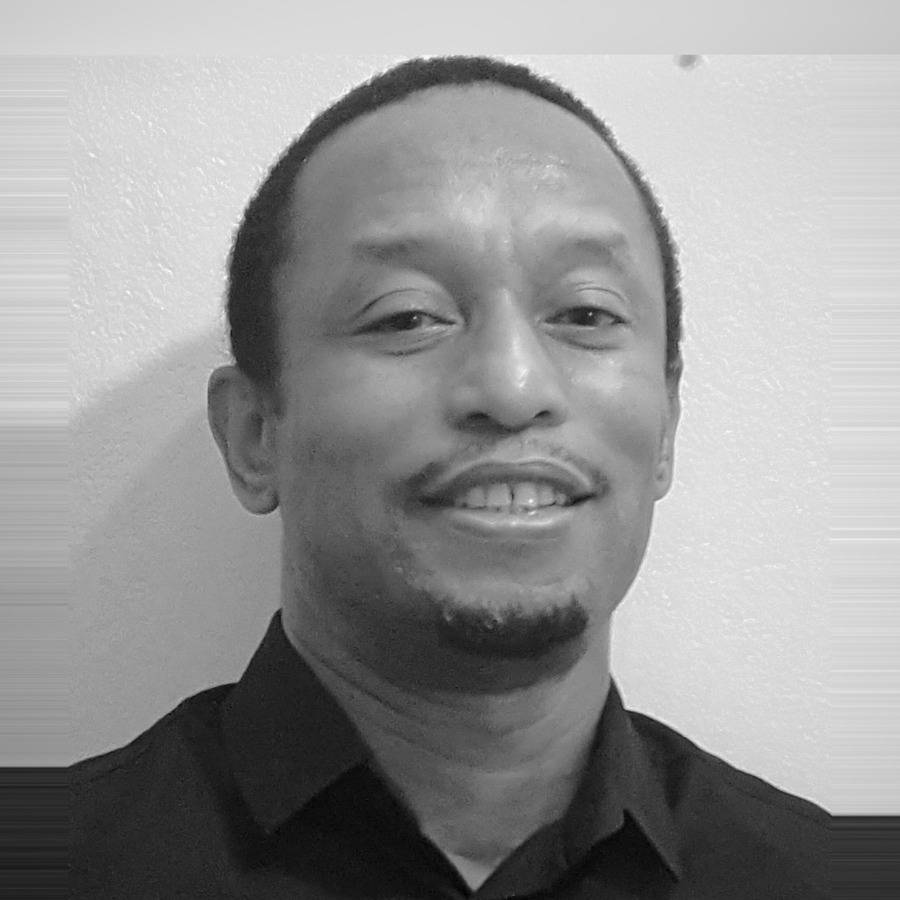
The Founder
Ronnie Phala
Founder & CEO, Aigentic Change Partners
Ronnie Phala has spent over 30 years at the intersection of strategy, change management, and digital transformation, including a significant tenure as an executive at Accenture. He has advised large-scale organisations across the public and private sectors on the operational and human dimensions of systemic change.
Aigentic Change Partners is the product of a long-held conviction: that the failure point in most technology transformations is not the technology. It is the organisational design surrounding it.
The SDS model is Ronnie's answer to the specific challenge of the AI era, a practical, deployable model for turning the human consequences of automation into the engine of adoption.
He is a contributor to Business Day, and has written on institutional design, digital infrastructure, and systems transformation for the Sunday Times, City Press, and Daily Maverick over the past decade.
Ronnie is also the publisher of NextShift SA, a weekly publication on AI and the future of work in South Africa.
info@aigentic.co.za | aigentic.co.za
Work With Us
Tell us where the friction is.
Aigentic works with a small number of organisations at a time. If you are carrying an AI adoption problem that has resisted conventional approaches, we want to hear about it.
If your situation is urgent, email us directly at info@aigentic.co.za.